Cooling Systems That Save Motors from Overheating
Discover how liquid, air, and hybrid cooling systems protect motors from overheating, extend service life, improve efficiency, and cut unplanned downtime.
Why Motors Overheat
Every motor converts electrical energy into mechanical work, and the rest emerges as heat that must be managed. Core loss in laminations, copper I²R loss in windings, mechanical friction, windage, and inverter-induced harmonics all fuel temperature rise. Left unchecked, heat accelerates insulation aging, increases winding resistance, and can trigger thermal runaway that shortens service life. The path from hotspots to ambient matters: heat must conduct from windings to the stator, through the frame, and finally to surrounding air. Ambient temperature, duty cycle, enclosure style, and installation constraints all influence the balance between generation and dissipation. Hotspots typically appear in end turns, slot bottoms, and bearing zones, so designs focus cooling where it counts. Effective systems combine conduction, convection, and radiation, reinforced by smart controls that reduce torque or speed during overload. Understanding those fundamentals sets the stage for targeted solutions, from optimized fins and ducting to liquid jackets and phase-change components, each engineered to maintain a safe temperature margin and protect the motor's reliability, efficiency, and output under demanding conditions.
Air-Cooling and Ducted Flow
Air is the first line of defense, and when shaped properly it is remarkably effective. Forced convection using axial or centrifugal fans pushes cool air over fins and across internal passages, stripping away boundary layers that trap heat. Shrouds, baffles, and carefully sized ducts prevent recirculation and ensure fresh intake reaches the hottest regions, especially the end windings. Fin geometry matters: spacing, height, and surface roughness can promote gentle turbulence that boosts heat transfer without excessive backpressure. TEFC housings pair external fans with deep fins to reject heat while protecting internals, whereas TENV designs rely on robust conduction and generous surface area. Filters on vents keep dust off fins and windings, preserving thermal performance; a clogged screen can add surprising degrees of rise. Engineers match fan curves to system resistance to avoid under-delivery at speed. Noise, contamination, and ingress protection drive trade-offs, but with smart layout and periodic cleaning, air systems deliver durable, low-cost cooling for most motors.
Liquid Cooling for High Power Density
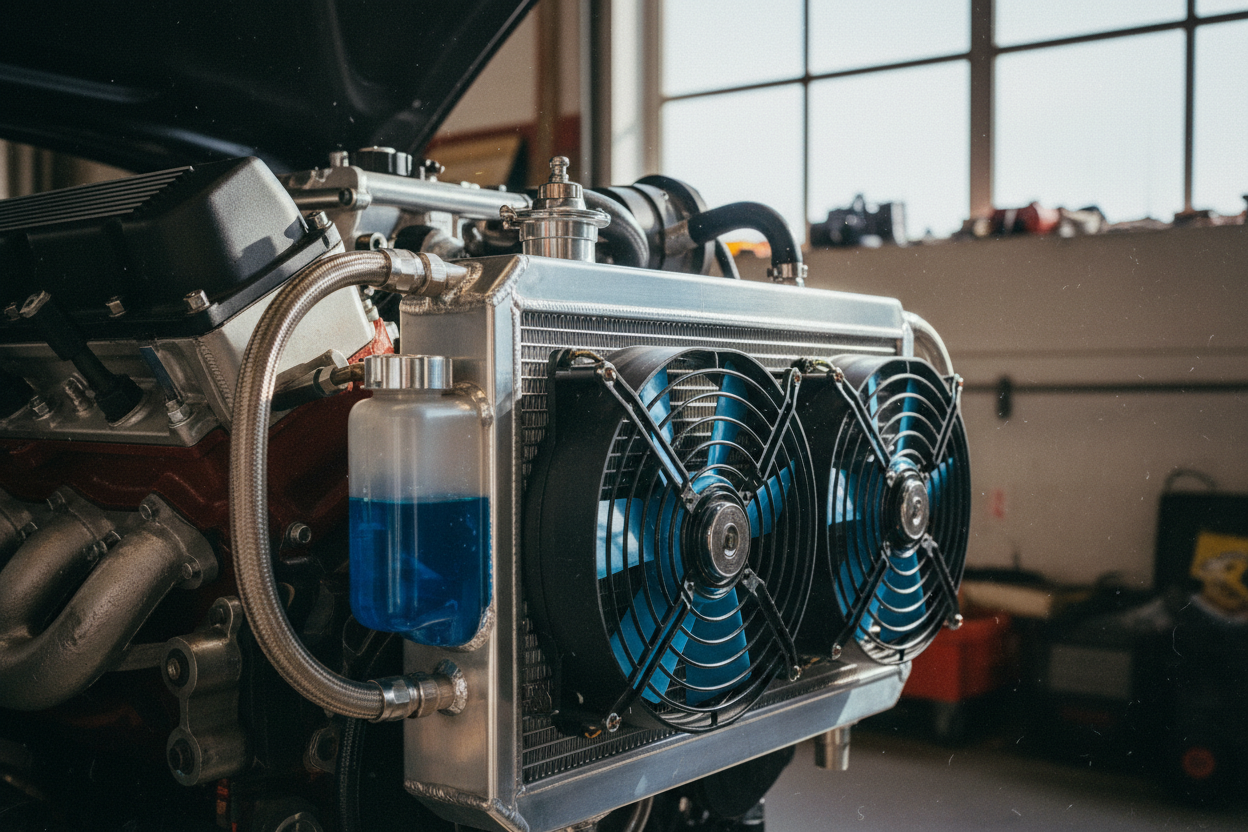
When power density climbs and airflow is limited, liquid cooling unlocks large heat capacity and tight temperature control. A motor can integrate a cooling jacket, spiral channels, or a cold plate bonded to the stator, moving heat to a compact radiator. A closed loop with pump, reservoir, radiator, and controls maintains steady coolant flow and pressure, while sensors verify inlet and outlet temperatures for real-time protection. Water-glycol blends offer strong heat capacity and corrosion inhibition; dielectric fluids suit high-voltage windings or electronics near the motor. Designers balance flow rate and pressure drop to keep Reynolds numbers in an efficient regime without stressing seals. Proper material pairing and inhibitors deter galvanic corrosion in mixed-metal circuits. Quick-disconnects with dripless valves simplify service and reduce spill risk. With careful routing to end turns and stator teeth, liquid circuits knock down hotspots, enabling quieter motors, smaller frames, and consistent torque even under heavy load or constrained ambient conditions.
Oil, Two-Phase, and Hybrid Methods
Beyond water-based systems, oil cooling offers lubrication and heat removal in one medium. Directed jets can bathe bearings, rotor cavities, and end turns, sweeping heat from friction zones while stabilizing film thickness. Viscosity, additive chemistry, seal compatibility, and foaming behavior must be considered to maintain both thermal and mechanical performance. In compact or sealed enclosures, two-phase solutions like heat pipes and vapor chambers move heat with minimal temperature gradient, relying on evaporation and capillary-driven condensation. These components relocate energy from dense windings to an external sink without pumps, though orientation and wick design influence effectiveness. Phase-change materials can buffer brief overloads by absorbing spikes, giving controls time to derate torque gracefully. Hybrid systems combine fan-assisted fins with liquid jackets or oil sprays for targeted hotspots, achieving resilience across varied duty cycles. Filtration keeps oil clean, while degassing and proper venting prevent cavitation. With the right pairing of media and hardware, these methods tame extreme flux density and transient loads that challenge conventional airflow.
Materials and Thermal Interfaces
Cooling hardware succeeds only when the internal thermal path is optimized. High-conductivity stator potting resins fill voids around windings, reducing thermal resistance and immobilizing conductors against vibration. Thermal interface materials—gap pads, greases, and phase-change films—bridge microscopic roughness between cores, sleeves, and housings, slashing contact resistance when properly clamped to specified torque. Aluminum frames dissipate heat quickly and benefit from black, matte finishes that elevate emissivity, while robust cast iron offers mechanical stiffness with different thermal trade-offs. Generous fins increase surface area; rounded leading edges discourage dust buildup and improve airflow attachment. Internally, short, wide conduction paths from hotspots to the frame outperform long, narrow routes. Careful attention to fastener placement, flatness, and bonding ensures uniform pressure and stable performance over time. Enclosure choices balance ingress protection with ventilation; harsh environments may push designs toward sealed systems and added conduction mass. When materials, interfaces, and geometry align, downstream coolers can work efficiently without oversizing.
Monitoring, Control, and Maintenance
Prevention is as important as hardware. Temperature sensors such as RTDs and thermistors embedded in slots and end turns reveal true hotspots, while bearing probes flag friction issues before failure. Vibration and current signatures complement thermal data, feeding thermal models that predict rise under variable load. Drives can execute torque derating, fan speed modulation, and flux optimization to guard margins during surges. Soft-start profiles and well-tuned field-oriented control reduce copper loss and heat spikes. In service, cleaning fins, replacing clogged filters, and confirming fan rotation preserve airflow. For liquid systems, routine coolant checks for conductivity and inhibitor health, leak inspections, and pump verification sustain performance. Oil-cooled designs benefit from filtration audits and attention to seal integrity. Alarm thresholds and fail-safes should be validated periodically so interventions occur before damaging temperatures appear. With smart sensing, proactive maintenance, and conservative controls, cooling systems not only save motors from overheating but also extend efficiency, uptime, and overall lifecycle value.