How to Build a Balanced Plate Without Counting Calories
Skip the math: use your plate, hands, and hunger cues to build satisfying, nutrient-dense meals that match your goals—no calorie counting required.
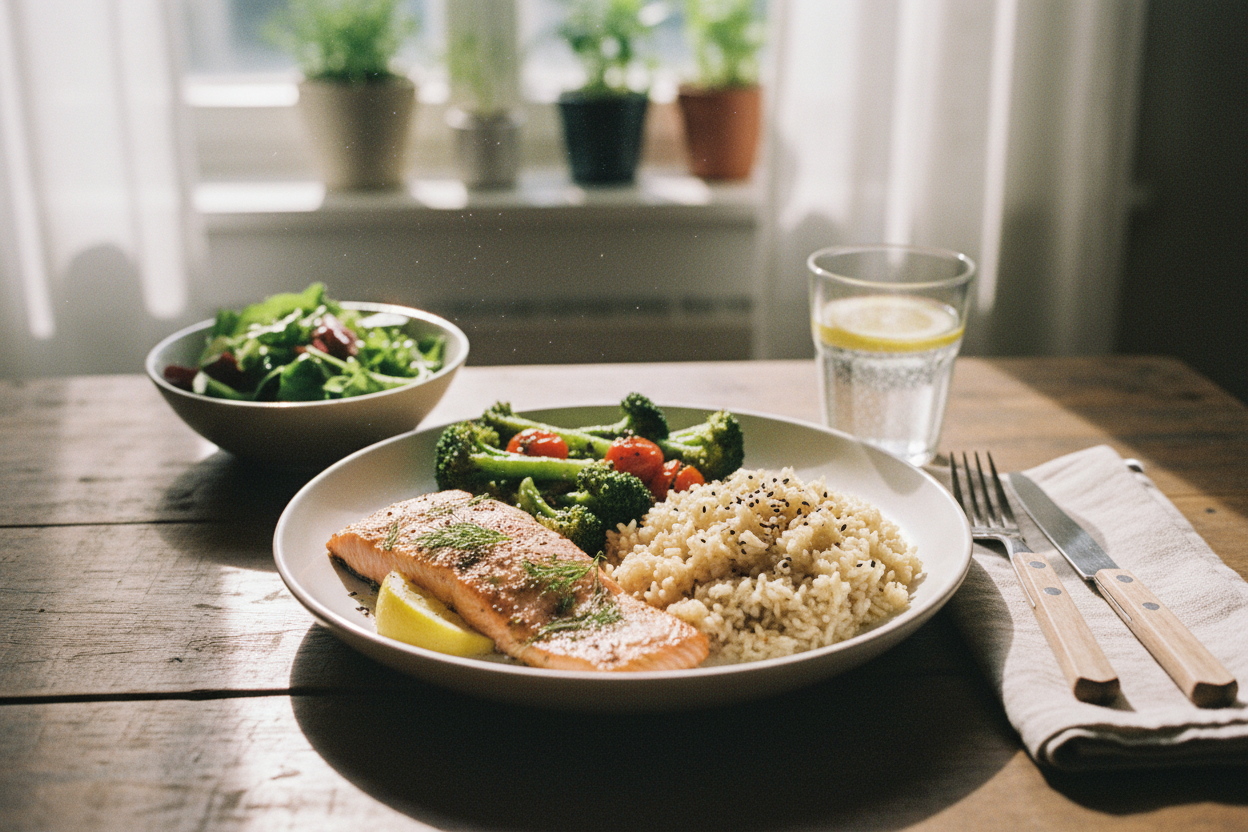
Use the Plate Method. Building a balanced plate without counting starts with simple visual cues. Picture your plate as a guide: aim for roughly half non-starchy vegetables, a quarter lean protein, and a quarter smart carbohydrates, with a small accent of healthy fats for flavor and satiety. This method works because it uses proportions, not math, to balance energy, nutrients, and fullness. Pile vegetables high for volume and crunch, then add a satisfying protein like chicken, tofu, eggs, beans, or fish. Round it out with fiber-rich carbs such as quinoa, brown rice, potatoes, or whole-wheat pasta. Finish with a drizzle of olive oil, a few olives, or sliced avocado. Choose a plate size that feels natural to you and fill it intentionally. The colors on your plate should look like a garden: greens, oranges, reds, purples. When your plate looks lively and varied, you are far more likely to meet your body's needs without ever counting a single number.
Prioritize Protein. Thoughtful protein choices help you feel satisfied, stabilize energy, and support daily activity. Include a portion about the size of your palm at most meals, adjusting to your appetite. Mix animal and plant sources to keep things interesting: grilled chicken or turkey, salmon or white fish, eggs or Greek yogurt, lentils, black beans, edamame, tofu, or tempeh. Choose mostly lean proteins and use herbs, spices, citrus, garlic, or chili to add bold flavor without relying on heavy sauces. Cooking methods like grilling, baking, poaching, or stir-frying in a little oil keep textures appealing and portions consistent. For convenience, batch-cook a few portions to anchor quick meals throughout the week. If you prefer plant-forward plates, combine legumes with whole grains to create a complete amino acid profile over the course of your day. A reliable protein anchor reduces grazing and keeps you comfortably fueled between meals.
Choose Smart Carbs. Carbohydrates are not the enemy; the key is choosing fiber-rich options and pairing them well. Fill roughly a quarter of your plate with smart carbs like brown rice, farro, quinoa, whole-wheat pasta, oats, beans, chickpeas, lentils, or starchy vegetables such as potatoes, squash, and corn. These choices digest more steadily, supporting stable energy and a calmer appetite. Fruit also counts here; berries, apples, pears, or citrus add natural sweetness and hydration. If you prefer a quick visual cue, a cupped hand can approximate a cooked-grain portion. Balance your carbs with protein and healthy fats to slow digestion and enhance satisfaction. Choose textures you love—chewy grains, creamy beans, tender potatoes—so your plate feels abundant and comforting. Rotate different carbs over the week for variety and micronutrients. When carbs are thoughtfully included, you avoid extremes: no deprivation, no overdoing it—just steady, enjoyable nourishment.
Add Healthy Fats. Thoughtful portions of healthy fats bring flavor, satisfaction, and help your body absorb fat-soluble nutrients. Think olive oil, avocado, nuts, seeds, tahini, and nut butters. A simple cue is a thumb-sized drizzle of oil, a small spoon of tahini, or a modest handful of nuts. Use fats strategically: sauté vegetables in a little olive oil, finish a grain bowl with avocado, or sprinkle seeds over salads for crunch. Blend yogurt with olive oil, lemon, and herbs for a creamy dressing that adds richness without heaviness. Choose mostly unsaturated fats, and let them carry flavors—smoky paprika in olive oil, toasted sesame with lime, or crushed garlic and herbs. These accents elevate vegetables and grains while increasing satiety, making balanced portions feel natural. Remember, fats are potent; a little goes a long way in taste and fullness. Prioritize quality, enjoy the mouthfeel, and let them complete the plate rather than dominate it.
Fill Half with Produce. Making vegetables the star simplifies balance without counting. Aim to fill half your plate with non-starchy vegetables—leafy greens, broccoli, cauliflower, peppers, mushrooms, tomatoes, zucchini, cucumbers, carrots, or green beans—and add some fruit if you like. This boosts fiber, water, and volume, which naturally supports fullness and digestion. Vary your textures to keep things interesting: crisp salads, roasted trays, quick sautés, and simple steams. Season generously with herbs, spices, citrus, and a pinch of salt to make vegetables craveable. Think color: deep greens for earthiness, reds and oranges for sweetness, purples for depth. Keep prepped produce ready—washed greens, chopped peppers, roasted roots—so half a plate is effortless. If raw salads leave you cold, warm them up: wilt spinach under hot grains or toss roasted veggies with a lemony dressing. When produce takes center stage, your meals feel big, vibrant, and satisfying without meticulous tracking.
Eat Mindfully. A balanced plate works best when paired with mindful eating. Start meals with a quick hunger check, then serve yourself on a plate rather than eating from packages. Sit down, minimize distractions, and slow your pace—chew thoroughly and let flavors develop. Pause midway to reassess hunger and fullness cues; you might keep eating, or you might be satisfied. Embrace flexibility: some days you may want more protein, others more carbs or vegetables. Honor that without judgment. Sip water or unsweetened tea during the meal to support comfortable digestion. If you plan for seconds, consider adding more vegetables first. Savoring your food increases pleasure and makes right-sized portions feel natural, not forced. Mindful routines—like placing utensils down between bites or taking a breath before refilling—turn balance into a habit. Over time, you will rely less on rules and more on your body's reliable internal signals.
Make It Practical. Consistency thrives on simple systems. Stock your kitchen with easy building blocks: canned beans, frozen vegetables, pre-washed greens, whole grains, eggs, canned fish, tofu, and a couple of favorite sauces or spice blends. Batch-cook a pot of grains and a tray of roasted vegetables, and prep a versatile protein for quick assembly. Use templates: a grain-and-greens bowl with beans and avocado; a colorful stir-fry over rice with tofu; a taco plate with fish, corn tortillas, slaw, and salsa; an omelet stuffed with vegetables plus fruit on the side. When dining out, scan for plate balance—ask for extra vegetables, choose grilled or baked options, and request sauces on the side. Travel with portable staples like nuts or fruit to bridge long gaps. Most importantly, personalize: adjust portions and ingredients to your preferences, culture, and schedule. The goal is repeatable meals that feel good and fit your real life.