Master Your Mobility: Daily Routines for Flexible, Pain-Free Movement
Unlock pain-free movement with quick daily routines. Learn warm-ups, joint flows, and recovery habits that boost flexibility, strength, and posture.
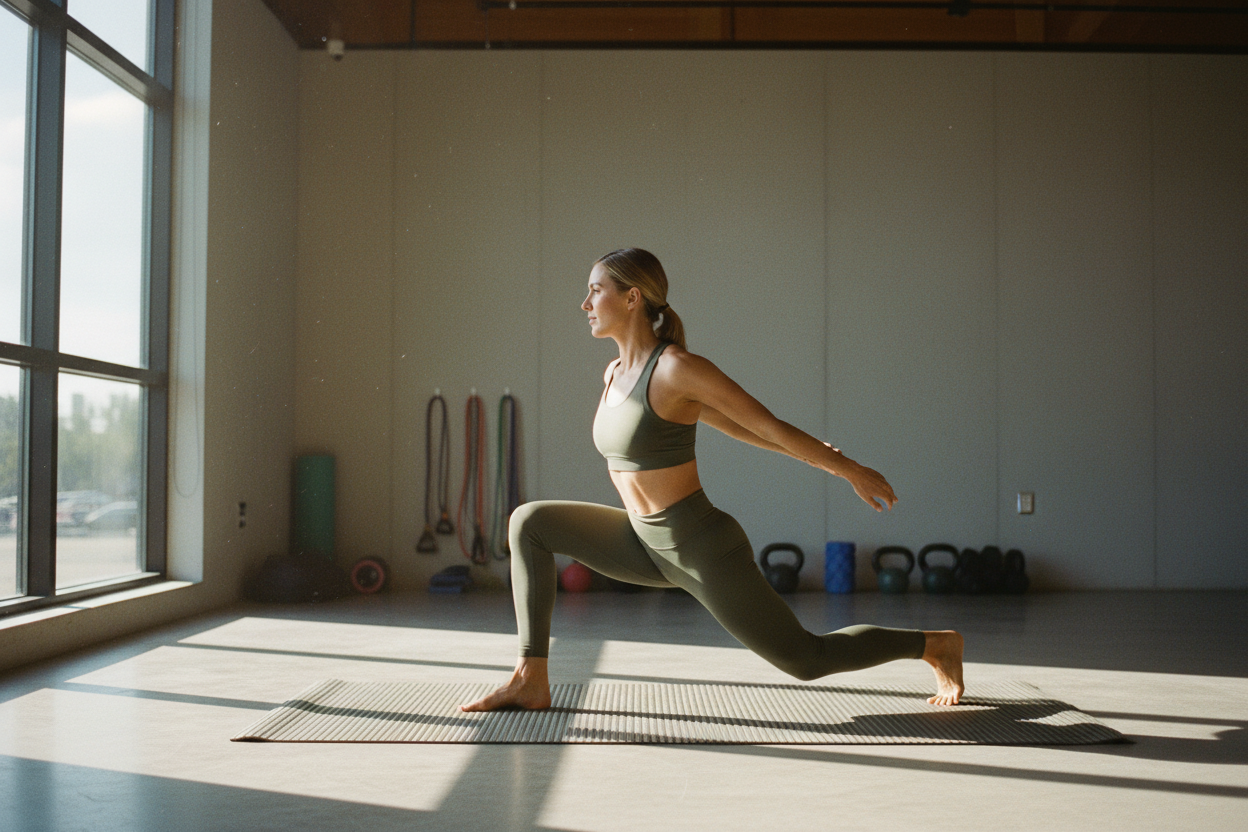
Set Your Foundation — Flexible, pain-free movement starts with intention and alignment. Before you stretch or sweat, center your day with two minutes of breath and posture. Stand tall with a neutral pelvis, soften your knees, and spread your weight through the foot tripod—big toe, little toe, and heel. Stack your ribcage over your hips and imagine a string drawing the crown of your head upward. Inhale through your nose, filling the lower ribs with a calm, 360-degree breath; exhale longer than you inhale to release excess tension. Add gentle neck nods, shoulder blade glides, and a slow spinal wave to remind your nervous system that movement is safe. This mindful scan builds body awareness, primes joint health, and reduces the urge to overcompensate with tightness later. Treat it like cleaning your glasses: quick, consistent, and clarity-building. When your foundation is steady, every stride, reach, and lift becomes smoother, more efficient, and naturally more mobile.
Wake-Up Mobility Circuit — Greet your morning with a simple sequence that oils every joint. Begin with slow controlled articular rotations for neck, shoulders, elbows, wrists, hips, knees, and ankles, tracing the largest comfortable circles without shifting your torso. Flow into cat-cow and a kneeling thoracic rotation to untwist desk stiffness. Transition to 90/90 hip switches, pausing to breathe into tight corners, then stand for Cossack squats to explore lateral hips and adductors. Finish with ankle rocks, calf pumps, and toe yoga to wake up your arches and improve balance. Keep the tempo unhurried and the breath smooth, aiming for quality over quantity. Think of it as a dynamic flexibility primer: joints glide, tissues hydrate, and your brain maps a wider, safer range. You'll notice walking feels easier, your stride opens, and shoulders sit naturally. Done daily, this gentle circuit becomes a reliable anchor for pain-free momentum.
Movement Snacks Throughout the Day — Long sitting compresses hips, stiffens the thoracic spine, and quiets the glutes. Counter it with brief movement snacks sprinkled through your day. Set a cue—after calls, before coffee, or when you send a message—to stand, breathe, and reset. Try a doorway chest opener, seated figure-four, and wrist extensions to undo keyboard strain. Add neck glides, scapular slides, and standing hip CARs to keep shoulders and hips honest. When possible, perform calf raises and gentle hamstring sweeps near your desk, and practice a tall posture check: ribs stacked, pelvis neutral, feet grounded. These tiny rituals boost circulation, refresh tissue quality, and prevent the low-grade aches that accumulate by day's end. They also build resilience by teaching your body to change gears often. Keep them friction-free and short, so they're easy to repeat. Your goal isn't a workout—it's consistent, low-dose inputs that compound into better mobility and sustained energy.
Pre-Workout Primers for Smooth Training — Treat your warm-up as a performance tool. Start with gentle cardio to raise temperature, then layer in targeted dynamic warm-up moves that mirror your session. For lower body days, blend banded lateral walks, hip airplanes, Cossack squats, and ankle dorsiflexion rocks to unlock hips and feet. For upper body days, use scapular push-ups, face pulls, shoulder CARs, and thoracic extensions over a foam roller. Practice your core bracing with dead bug variations and tall-kneeling presses to connect ribs to pelvis. Finish with two or three ramp-up sets of your main lift, progressively increasing range and load while keeping breath calm. The aim is activation, not fatigue—prime the exact tissues and patterns you plan to use. This approach sharpens coordination, reduces compensations, and makes technical cues land. You'll feel smoother under load, recover faster between sets, and reinforce efficient mechanics that carry into daily life.
Core and Hip Control for Lasting Ease — True mobility is strength you can access anywhere, not just on the mat. Build it by training core and hip control daily. Use dead bug, bird dog, side plank, and pallof press variations to connect breath, ribcage, and pelvis. Layer in hip hinges, glute bridges, and single-leg RDLs to teach your hips to move while your spine stays stable. Explore hip airplanes and single-leg balance to marry strength with coordination and ankle integrity. Focus on exhaling to brace, spreading your foot tripod, and keeping knees tracking over middle toes. Sprinkle short isometric holds at end range—gentle tension that tells your body it's safe there. These drills improve gait, protect knees and lower back, and make everyday tasks—carrying groceries, climbing stairs, or gardening—feel lighter. Commit to controlled, repeatable reps, not heroics. Over time, you'll own more range, reduce nagging tightness, and cultivate durable, flexible strength.
Evening Reset and Recovery Ritual — Wind down with a simple recovery routine that soothes the nervous system and restores tissues. Start with nasal breathing—inhale softly, exhale longer—to signal parasympathetic calm. Spend a few minutes of gentle foam rolling on calves, quads, glutes, lats, and upper back, pausing on tender spots while you breathe. Follow with relaxed stretching for hip flexors, hamstrings, pecs, and the thoracic spine, holding positions just shy of discomfort and melting deeper on each exhale. Add a brief contract-relax pulse—lightly engage, then soften—to gain range without forcing. Finish with ankle circles and wrist flossing to keep small joints happy. A warm shower, light hydration, and screens dimmed support the shift from drive to restore. This ritual doesn't need to be long; it needs to be consistent. You'll sleep easier, wake looser, and train with fewer roadblocks, stacking effortless wins for pain-free continuity.
Consistency, Progress, and Personalization — The secret sauce is showing up, tracking small wins, and adapting. Use habit stacking—tie mobility to anchors you already do, like brushing teeth or brewing coffee. Log what feels tight, what opens, and which drills help; let that guide gentle autoregulation. Progress can mean slower tempo, longer exhales, steadier balance, or a smoother end-range hold—not just deeper stretches. Rotate themes across the week: hips one day, shoulders the next, full spine flow after. If a spot feels irritated, reduce intensity, shorten range, or switch to isometrics while pain calms. Keep a playful spirit—crawl, carry, skip, hang, and balance; variety feeds coordination and keeps motivation fresh. Support the routine with basics: hydration, nutrient-dense meals, and regular sleep. Most importantly, celebrate consistency over perfection. Little by little, you'll build a body that moves freely, adapts easily, and stays flexible and strong for whatever your life demands.